#include <sys/types.h>
#include <stdio.h>
#include <fcntl.h>
#include <stdlib.h>
#include <string.h>
#include <stddef.h>
#include <stdarg.h>
#include <stdint.h>
#include <unistd.h>
#include <errno.h>
#include <limits.h>
#include <pthread.h>
#include <assert.h>
#include <object.h>
#include <list.h>
#include <thread.h>
#include <crt0.h>
#include <malloc0.h>
#include <pthread0.h>
#include <arch.h>
#include <vfs.h>
#include <cpu_node.h>
#include <interrupt.h>
#include <zone.h>
#include <page_frame.h>
#include <paging.h>
#include <segment.h>
#include <x86.h>
#include <debug.h>
#include <initm.h>
#include <onetime_map.h>
#include <fat.h>
Go to the source code of this file.
|
| typedef void(* | exec_entry )(char *args, char *envs, unsigned long kpma) |
| |
|
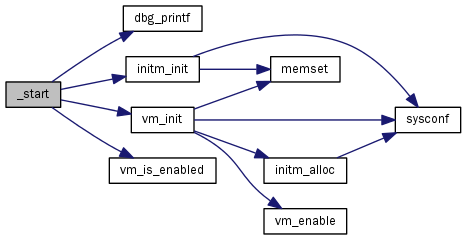
| void | _start (char *args, char *env) |
| |
|
| unsigned long | end |
| | "end" will indicates the end of kernel image region More...
|
| |
| typedef void(* exec_entry)(char *args, char *envs, unsigned long kpma) |
| void _start |
( |
char * |
args, |
|
|
char * |
env |
|
) |
| |
"end" will indicates the end of kernel image region
- Note
- Use the address of "end" to get an address of the end of kernel image. "&end"

 1.8.4
1.8.4

